
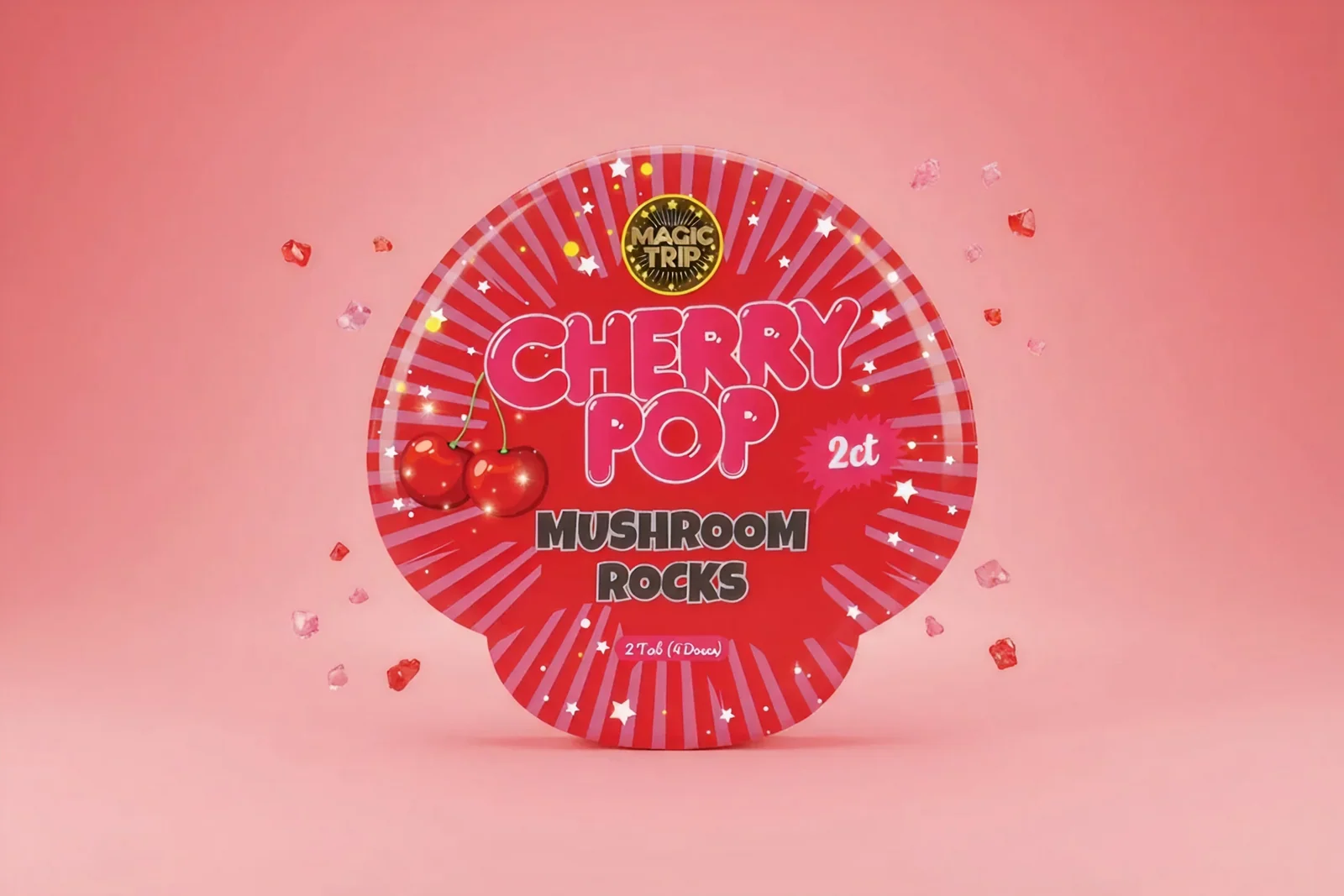
The candy aisle has changed. Alongside the sour gummies and chocolate bars, a new category has appeared: functional mushroom candy. Mushroom rocks are one of the more recognizable formats in that category. They look like a childhood candy, they crackle and pop on the tongue, and the label lists mushrooms that most people associate with wellness rather than with a psychedelic experience.
That association is the source of most of the confusion. The word “mushroom” carries two meanings in the supplement world. One meaning refers to culinary and functional mushrooms like lion’s mane and reishi. The other refers to psilocybin-containing mushrooms. Mushroom rocks belong to the first category. They are legal, they do not produce a high, and they are sold as a food product.
This guide is written for a Worcester reader who has seen mushroom rocks online or in a store and wants a straight answer about what they are and where to find them locally.
What Mushroom Rocks Actually Are
Mushroom rocks are a candy product with a functional mushroom blend added to the formula. The format is similar to popping candy, the kind that crackles and fizzes when it hits your tongue. The mushroom component is usually a blend of lion’s mane, reishi, and cordyceps, the three most common functional mushroom species in the American market.
The candy base is made with standard confectionery ingredients. Depending on the brand, that can include cocoa butter, cocoa mass, organic cane sugar, oat milk powder, and coconut oil. The result is a sweet, fruit-flavored product with a playful texture rather than a medicinal one.
None of the mushrooms in a legal mushroom rock product contain psilocybin. They are the same species used in functional mushroom coffee, tea, and chocolate. They are legal to sell as food or dietary supplements in Massachusetts.
The Three Functional Mushrooms You Will See Most Often
Lion’s mane (Hericium erinaceus) is a white, shaggy mushroom that grows on hardwood trees. It has been studied for its potential effects on nerve growth factor and cognitive function. The research is preliminary, and most of the human studies are small, but it is one of the more studied functional mushrooms in the cognitive category.
Reishi (Ganoderma lucidum) is a woody, bitter mushroom traditionally used in East Asian medicine for immune support and relaxation. It is not a culinary mushroom. It is typically extracted and used in powders, tinctures, and teas. Reishi is one of the most studied medicinal mushrooms in the world.
Cordyceps is a genus of fungi that parasitizes insects. The most famous species, Ophiocordyceps sinensis, is known as the caterpillar fungus. Cultivated cordyceps is used in supplements and is often marketed for energy and athletic performance. The evidence for that use is limited and mixed.
None of these three species is psychoactive. They do not contain psilocybin or any other hallucinogenic compound.
Mushroom Rocks vs. Psychedelic Mushrooms
The distinction between functional mushrooms and psilocybin mushrooms is the single most important thing to understand about this category. Psilocybin is a controlled substance under federal law. It is classified as a Schedule I drug, meaning the DEA considers it to have a high potential for abuse and no currently accepted medical use at the federal level.
Massachusetts voters had the opportunity to change the state’s approach to psychedelic substances in 2024. The ballot measure, known as Question 4, would have allowed people aged 21 and older to grow, possess, and use certain natural psychedelic substances, including psilocybin and psilocin. The measure failed, with about 43 percent in support and 57 percent opposed. As the question did not pass, the substances remain illegal under state law, and under Article 48 of the Massachusetts Constitution a substantially similar initiative cannot return to the statewide ballot before 2030.
That means any product sold legally in a Massachusetts retail setting cannot contain psilocybin. Mushroom rocks are not a psilocybin product. They are a functional mushroom candy. If a product marketed as mushroom rocks produces psychoactive effects, it is not a legal functional mushroom product and should be avoided.
The Ballotpedia entry on Massachusetts Question 4 provides the full text and results of the 2024 initiative.
What to Look for on a Mushroom Rocks Label
The functional mushroom candy market is not tightly regulated. The FDA oversees dietary supplements but does not review them for safety or efficacy before they are sold. That means a product can reach a shelf with vague claims and no testing data.
Here is what to look for on a mushroom rocks label:
- Mushroom species. A good label names the species. “Lion’s mane” is less precise than “Hericium erinaceus,” but it is more useful than “mushroom blend.”
- Psilocybin-free statement. A legal product will clearly state that it does not contain psilocybin. If the label is ambiguous, ask the retailer before buying.
- Third-party testing. A certificate of analysis from an independent lab confirms that the product was tested for heavy metals and adulterants. This is the main quality signal in the supplement market.
- Amount per serving. If the label does not list the milligrams of mushroom extract per serving, the brand is not giving you the data you need.
- Allergen statement. Some candy bases contain tree nuts, dairy, or gluten. Check the allergen panel if you have sensitivities.
The Adulteration Risk in Mushroom Products
The FDA and CDC investigated a specific brand of mushroom chocolate and gummies in 2024 after reports of severe illnesses. The investigation found that some of the products contained compounds that were not disclosed on the label. Between January and October 2024, there were 180 reported illnesses and 73 hospitalizations across 34 states linked to that brand.
The FDA’s investigation into Diamond Shruumz mushroom products is a case study in why third-party testing matters in this category. The products were advertised as containing a proprietary mushroom blend. The FDA found harmful chemical compounds in some samples, including muscimol, a compound found in Amanita mushrooms.
For a Worcester buyer, the practical takeaway is this: buy mushroom products from a retailer that provides lab testing documentation. Do not buy functional mushroom candy from an unverified online seller or a gas station shelf without a lab report.
Where to Find Mushroom Rocks in Worcester
deVINE Worcester
Website: devinetrip.com
deVINE Worcester carries Magic Trip Mushroom Rocks in its online store. The shop maintains a public lab reports page and states that its products are third-party tested. Check the site for current stock or stop in and ask what is on the shelf.
What deVINE Worcester Carries
deVINE Worcester lists Magic Trip Mushroom Rocks in its online store. The product is described as combining bright, fruity flavor with a nostalgic popping-candy texture and functional mushroom ingredients. The listing describes it only as a “mushroom blend, per the brand” and does not publish a full ingredient breakdown, so ask the shop for the batch COA to see the exact mushroom species and allergen details.
Check the product page for the exact ingredient list, the amount of mushroom blend per serving, and the allergen statement. If you have questions about the formula, the team at deVINE Worcester can walk you through what is in the product.
The shop also carries other functional mushroom products, including chocolate bars, gummies, and tinctures. If you are deciding between formats, the team can explain the difference in dose and delivery. Visit the deVINE Worcester homepage for the full catalog.
Mushroom Rocks vs. Other Mushroom Products
| Format | Psilocybin | Best For | Notes |
|---|---|---|---|
| Mushroom rocks | No | A playful, candy-format introduction | Check allergen statement |
| Mushroom chocolate bar | No | A slower, more measured format | Check mg per square |
| Mushroom gummies | No | Convenience and consistent dosing | Often combines multiple species |
| Mushroom tincture | No | Flexible dosing | Alcohol or glycerin base |
Frequently Asked Questions
Do mushroom rocks get you high?
No. Mushroom rocks are a functional mushroom candy. They do not contain psilocybin or any other psychoactive compound. They will not produce a high, a buzz, or perceptual changes. If a product marketed as mushroom rocks produces those effects, it is not a legal functional mushroom product and should not be consumed.
Are mushroom rocks legal in Massachusetts?
Yes. Functional mushroom products, including mushroom rocks, are legal to sell and consume in Massachusetts. The mushrooms used in these products are not controlled substances. Psilocybin remains illegal, and the 2024 ballot question to legalize psychedelic substances in Massachusetts did not pass.
What is in mushroom rocks?
The typical ingredients are a candy base and a functional mushroom blend. Common mushroom species include lion’s mane, reishi, and cordyceps. The candy base varies by brand and may include cocoa butter, cane sugar, oat milk powder, and coconut oil. Check the product label for the exact formula.
Where can I buy mushroom rocks in Worcester?
deVINE Worcester carries Magic Trip Mushroom Rocks in its online store. Visit the deVINE Worcester homepage to confirm current stock. The shop states that its products are third-party tested and maintains a public lab reports page.
How much mushroom rocks should I eat?
There is no standard dose because the products vary in mushroom extract concentration. Start with the smallest serving listed on the label. If you take prescription medication, especially immunosuppressants or blood thinners, talk to your doctor before adding any mushroom supplement to your routine.
Watch: The Truth About Gas Station Mushroom Products
The Bottom Line for Worcester Buyers
Mushroom rocks are a legal, psilocybin-free functional mushroom candy. They are not psychedelic. They are a candy product with mushroom extracts added. The quality of commercial mushroom products varies, and the label is your best tool for telling a well-made product from a vague one.
For Worcester readers who want to buy locally, deVINE Worcester carries Magic Trip Mushroom Rocks and maintains a public lab reports page. Visit the deVINE Worcester site to see current availability.